

Skip to footer

GLOBAL WORKFORCE COLLABORATION

How do global teams communicate effectively across languages and cultures?

A shared language helps employees collaborate, share knowledge and work more effectively across borders.

Corporate
{"theme":"toeic-xlight","enableAnimation":false,"columnDistribution":"1:1","Cards":[{"line":false,"lineColor":"yellow","description":"\u003ch2\u003e\u003cspan class\u003d\"heading2\"\u003eGlobal workforce and collaboration\u003c/span\u003e\u003c/h2\u003e\r\n\u003cp\u003eOrganizations increasingly operate across countries, regions and time zones. Employees collaborate with colleagues, customers and stakeholders who may have different native languages, cultural backgrounds and communication styles.\u003c/p\u003e\r\n\u003cp\u003eAs organizations become more interconnected, effective communication plays an increasingly important role in business success. A shared language helps employees exchange information, align priorities and contribute to common goals regardless of location.\u003c/p\u003e\r\n\u003cp\u003eStrengthening English proficiency and communication capability helps organizations support stronger global collaboration, improve knowledge exchange and enable performance across a global workforce.\u003c/p\u003e\r\n","assetType":"image","imageUrl":"/content/dam/ets-org/brands/toeic/men-women-discussing-with-tablet.jpg","contentReverse":false,"formConfiguration":{},"formMessage":{}}],"dataLayer":{}}

Why a shared language matters in global organizations

Global organizations depend on employees who communicate effectively across borders.

Whether employees are participating in meetings, coordinating projects or sharing expertise, communication helps organizations operate across diverse markets and locations.

A shared language helps organizations:

  • Support international collaboration
  • Improve communication across regions
  • Increase access to information
  • Enable greater workforce participation
  • Strengthen operational consistency

As international business becomes increasingly interconnected, English proficiency plays an important role in helping employees communicate and collaborate effectively.

Skill report

How communication drives global team performance


Successful global collaboration depends on more than technology and processes. Employees must also be able to exchange ideas, understand information and communicate effectively across locations.


Supporting international collaboration

Employees frequently work with colleagues, customers and stakeholders located in different countries and regions. Strong communication skills help teams coordinate activities, share information and work toward common objectives.


Enabling knowledge sharing

Organizations create value when employees can exchange expertise and information across teams and markets. A shared language supports knowledge sharing by helping information move more effectively across the organization.


Strengthening workforce connectivity

Communication helps employees participate more fully in workplace activities, regardless of where they are located. Strong English proficiency strengthens workforce connectivity and supports collaboration across a multinational workforce.

As organizations expand globally, communication capability becomes increasingly important in supporting global performance.


What the research tells us

Employers recognize the importance of communication in global workplaces
 

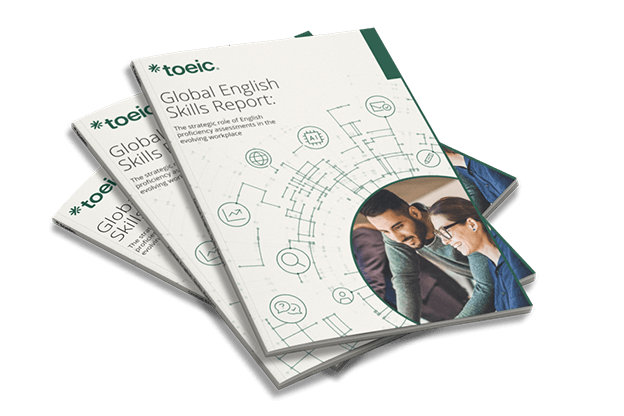
Communication capability plays a growing role in today’s global economy, according to the TOEIC® Global English Skills Report.

  • 90% of employers say English proficiency is critical to organizational success.
  • 92% say English proficiency is more important today than it was five years ago.

Organizations increasingly recognize the value of a shared language in supporting global collaboration, business performance and workforce effectiveness.

GESR
{"theme":"toeic-xlight","enableAnimation":false,"columnDistribution":"1:1","Cards":[{"line":false,"lineColor":"yellow","description":"\u003ch2\u003e\u003cspan class\u003d\"heading2\"\u003eSupporting communication across teams\u003c/span\u003e\u003c/h2\u003e\r\n\u003cp\u003eOrganizations often bring together employees with diverse language backgrounds, experiences and expertise.\u003c/p\u003e\r\n\u003cp\u003eA strong foundation in international business communication helps organizations:\u003c/p\u003e\r\n\u003cul\u003e\r\n\u003cli\u003eReduce misunderstandings between regional offices\u0026nbsp;\u003c/li\u003e\r\n\u003cli\u003eStandardize how information is documented and shared\u003c/li\u003e\r\n\u003cli\u003eBuild trust with international customers and partners\u0026nbsp;\u003c/li\u003e\r\n\u003cli\u003eCommunicate consistently across regions\u003c/li\u003e\r\n\u003c/ul\u003e\r\n\u003cp\u003eBy understanding workforce communication capabilities, organizations can better support employees who work across international environments.\u003c/p\u003e\r\n","assetType":"image","imageUrl":"/content/dam/ets-org/brands/toeic/women-doing-handshakw-with-men.jpg","contentReverse":false,"formConfiguration":{},"formMessage":{}}],"dataLayer":{}}

Building communication capability for a global economy


The ability to communicate across regions and business contexts is increasingly important in today's workplace.

As workforce mobility, international business activity and digital collaboration continue to expand, communication capability remains an important workforce asset.

Organizations that strengthen English proficiency and communication capabilities help employees contribute more effectively across the global workforce, support international collaboration and enable stronger global performance.



{"theme":"toeic-white-green","headingTag":"h3","disableMultiClose":false,"title":"Frequently asked questions","searchEnable":false,"tableborder":true,"dataLayer":{},"questions":[{"title":"What is international business communication?","accordionContent":"\u003cp\u003eInternational business communication refers to the exchange of information between employees, customers and stakeholders operating across countries and regions.\u003c/p\u003e\r\n"},{"title":"What challenges do global organizations face when communicating?","accordionContent":"\u003cp\u003eGlobal organizations often bring together employees with different levels of English proficiency and communication capability. Without a shared language, misunderstandings can occur, information may be interpreted inconsistently, and collaboration can become more difficult across teams.\u003c/p\u003e\r\n"},{"title":"What is workforce connectivity?","accordionContent":"\u003cp\u003eWorkforce connectivity refers to how effectively employees communicate, collaborate and participate across locations and organizational boundaries.\u003c/p\u003e\r\n"},{"title":"What are the main barriers to effective communication in the workplace?","accordionContent":"\u003cp\u003eCommon barriers include differences in English proficiency, inconsistent understanding of business terminology and difficulty communicating complex information clearly. These challenges can create misunderstandings, slow decision-making and make it harder for teams to stay aligned.\u003c/p\u003e\r\n"},{"title":"How does a shared language support collaboration?","accordionContent":"\u003cp\u003eA shared language helps employees exchange information, participate in discussions and collaborate more effectively across teams and locations. It supports knowledge sharing, organizational alignment and communication across the workforce.\u003c/p\u003e\r\n"}]}

Strengthen collaboration across your global workforce

A shared language helps employees connect, collaborate and contribute across regions and business functions.

By strengthening English proficiency and communication capability, organizations can support global collaboration, improve knowledge sharing and enable stronger performance across the global workforce.

Skill report